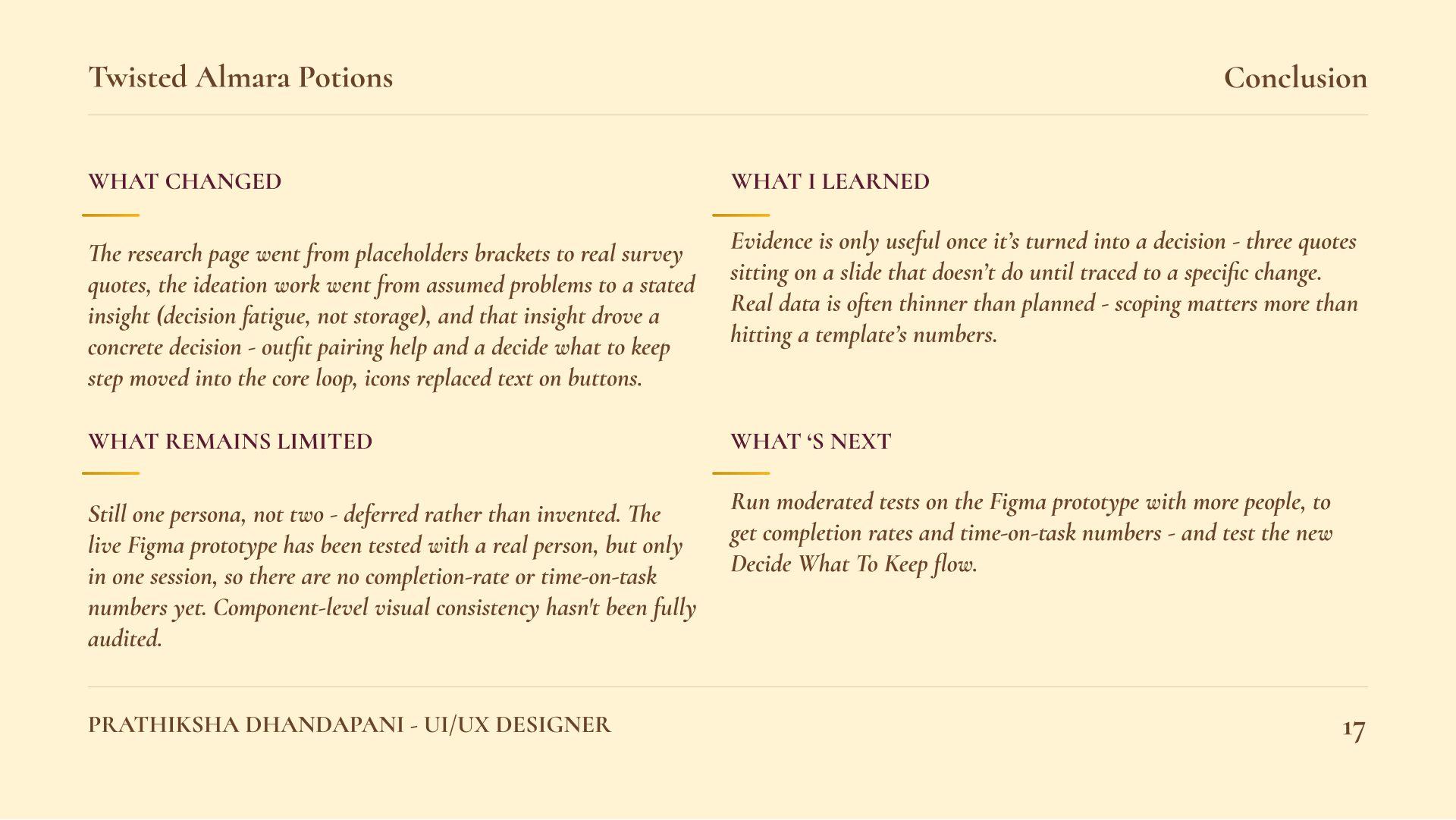
UX case study · Mobile app · 2026
TAP: Twisted Almara Potions
A wardrobe app that helps busy students catalogue clothes, plan outfits and decide what to keep.
Context
A wardrobe organizer built for busy students
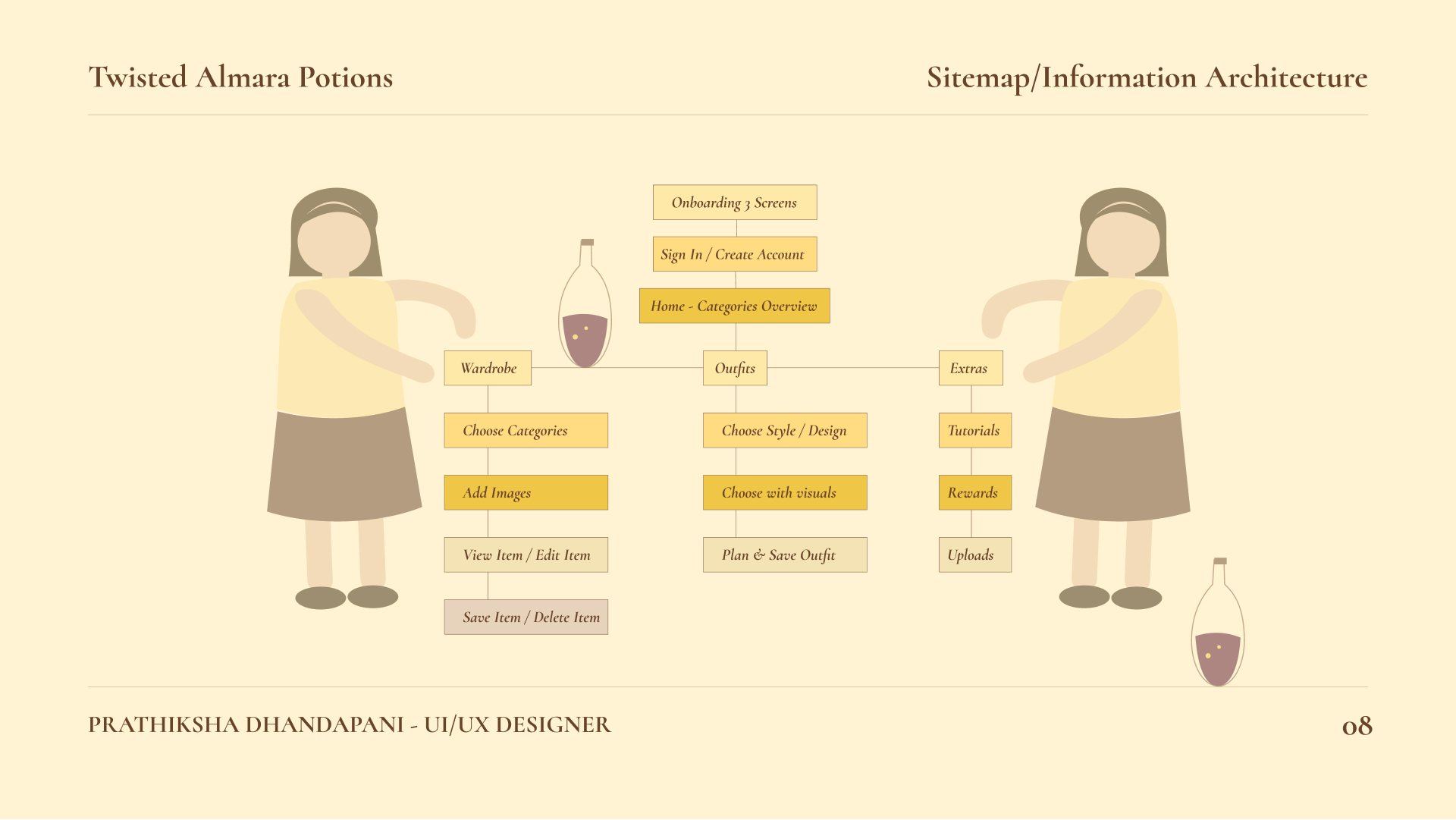
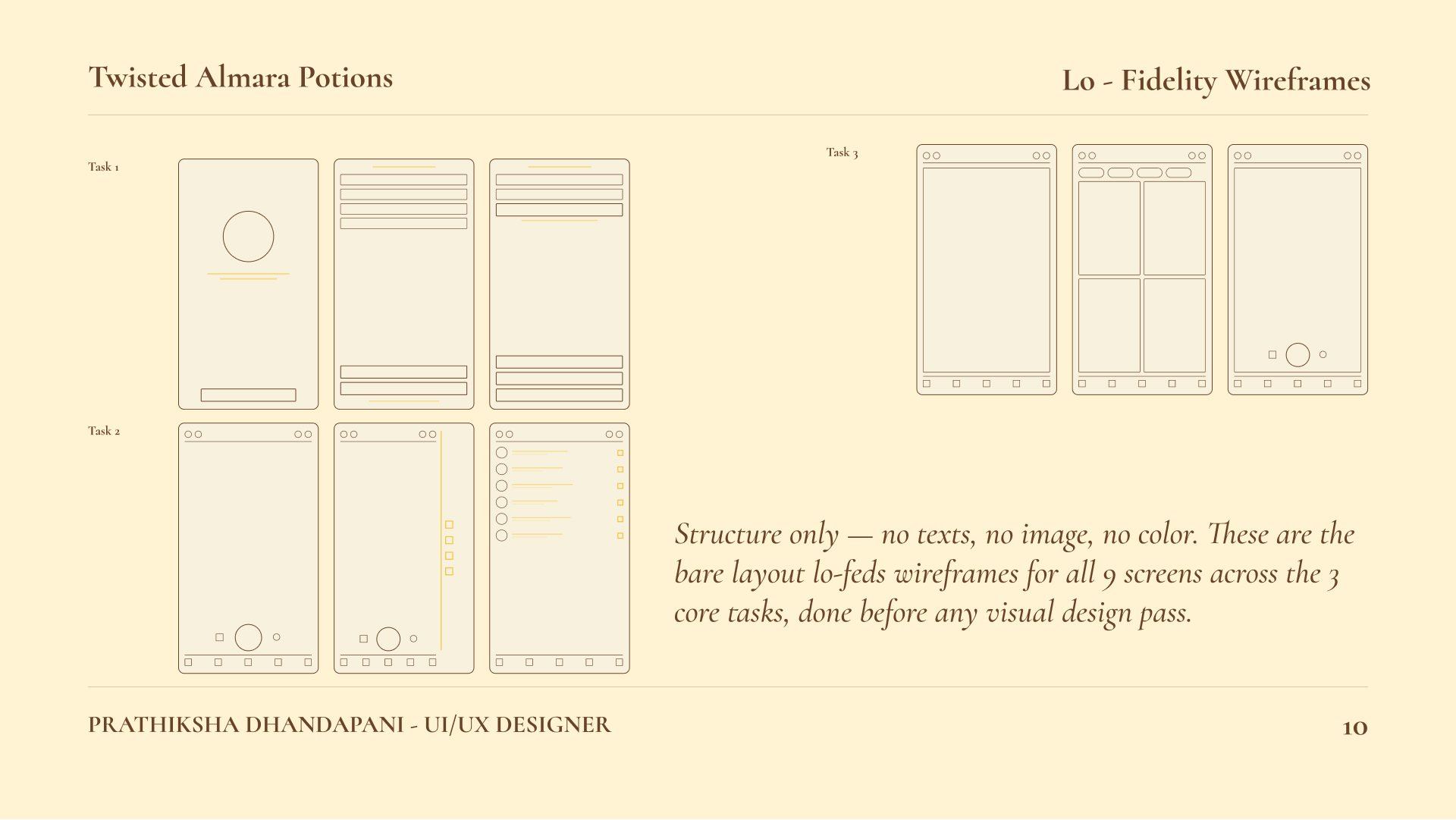
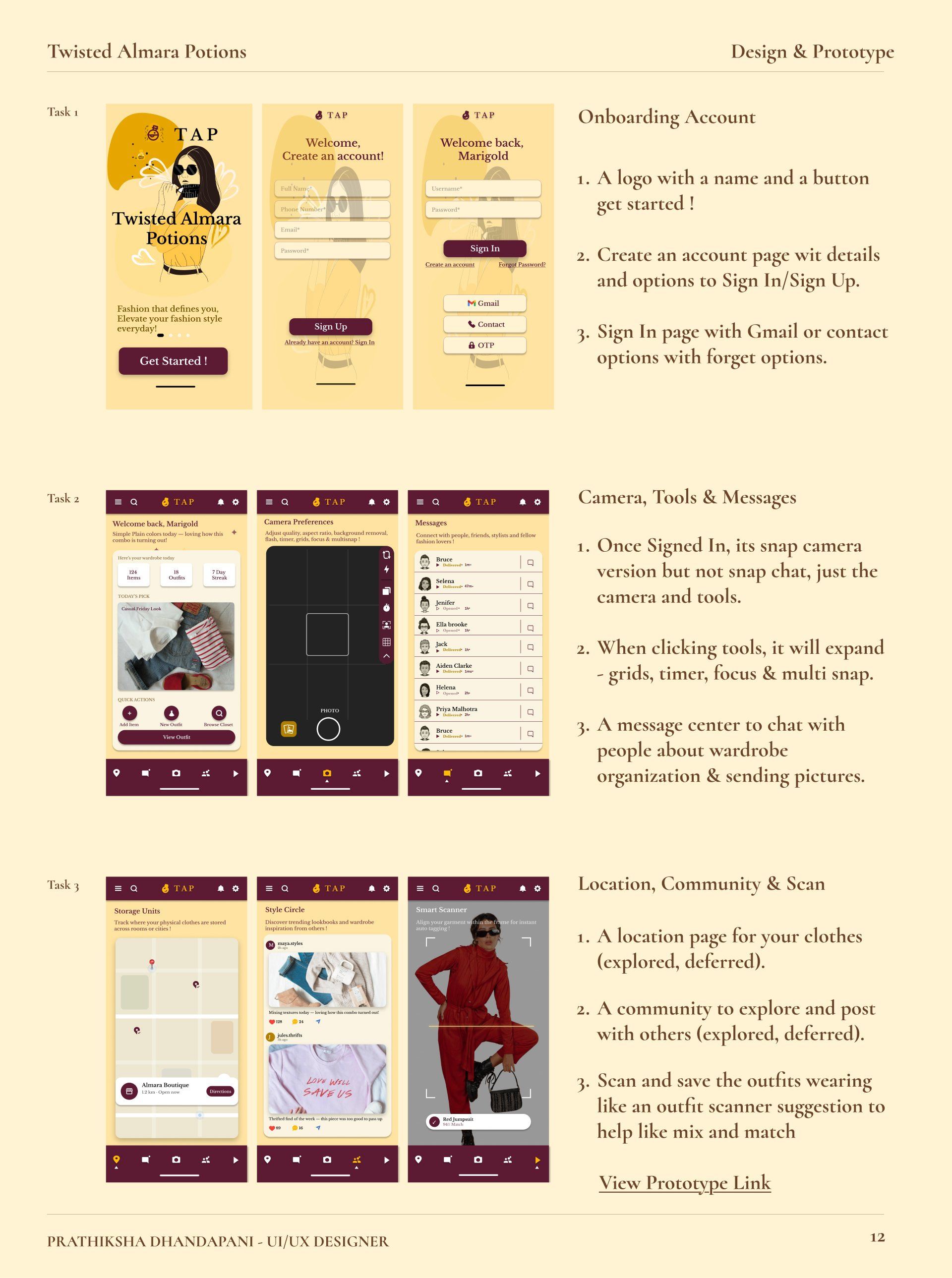
TAP is a wardrobe organizer app built for busy students, with other age groups as future scope. Users photograph their clothes, sort them by category and season, and plan outfits ahead for upcoming occasions. It also scans an existing wardrobe to help declutter it. I designed and ran the user survey, built the sitemap and task flows, designed the hi-fi screens and style guide, built the Figma prototype, and ran paper-prototype testing with 10 participants.
The problem
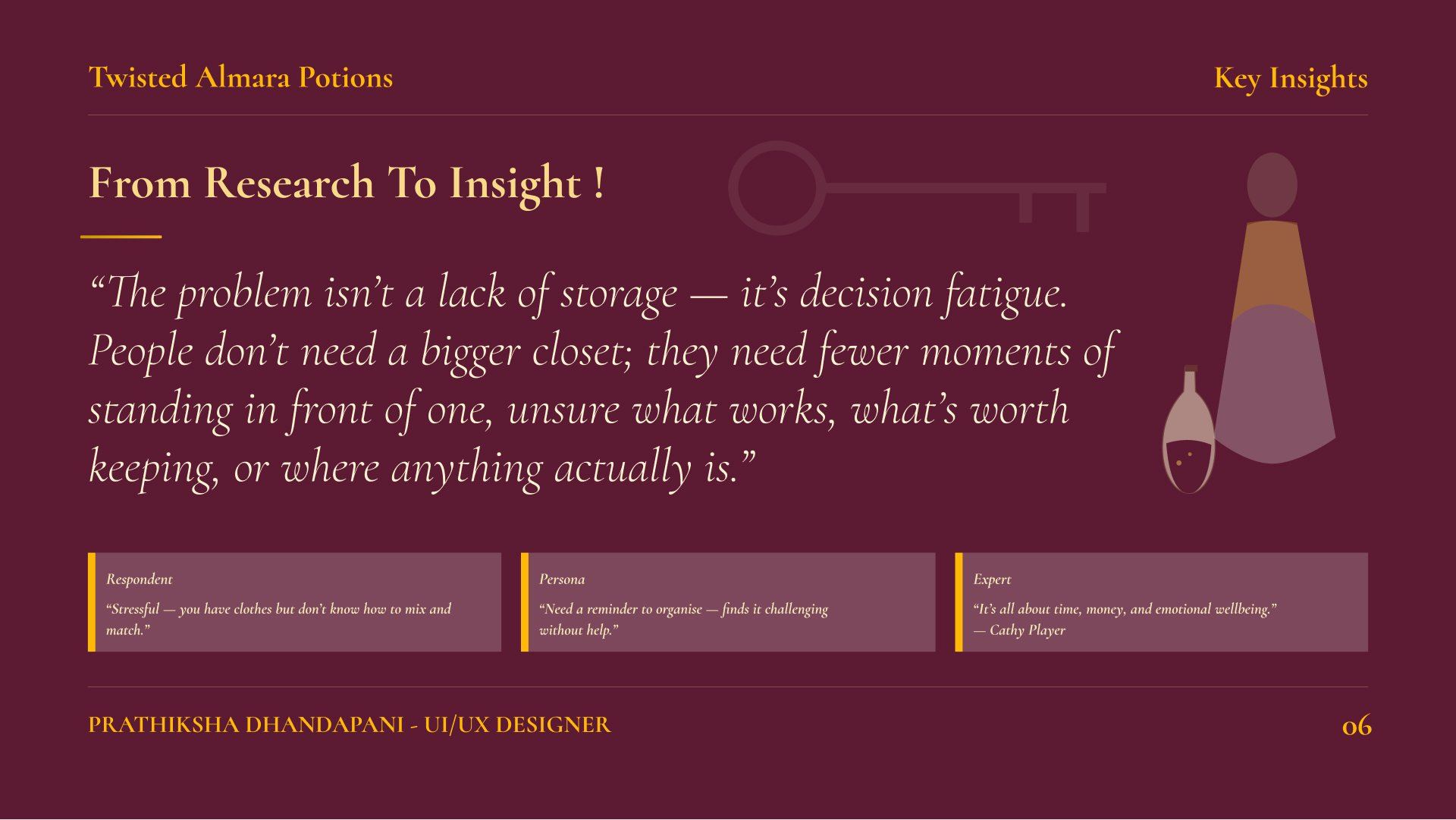
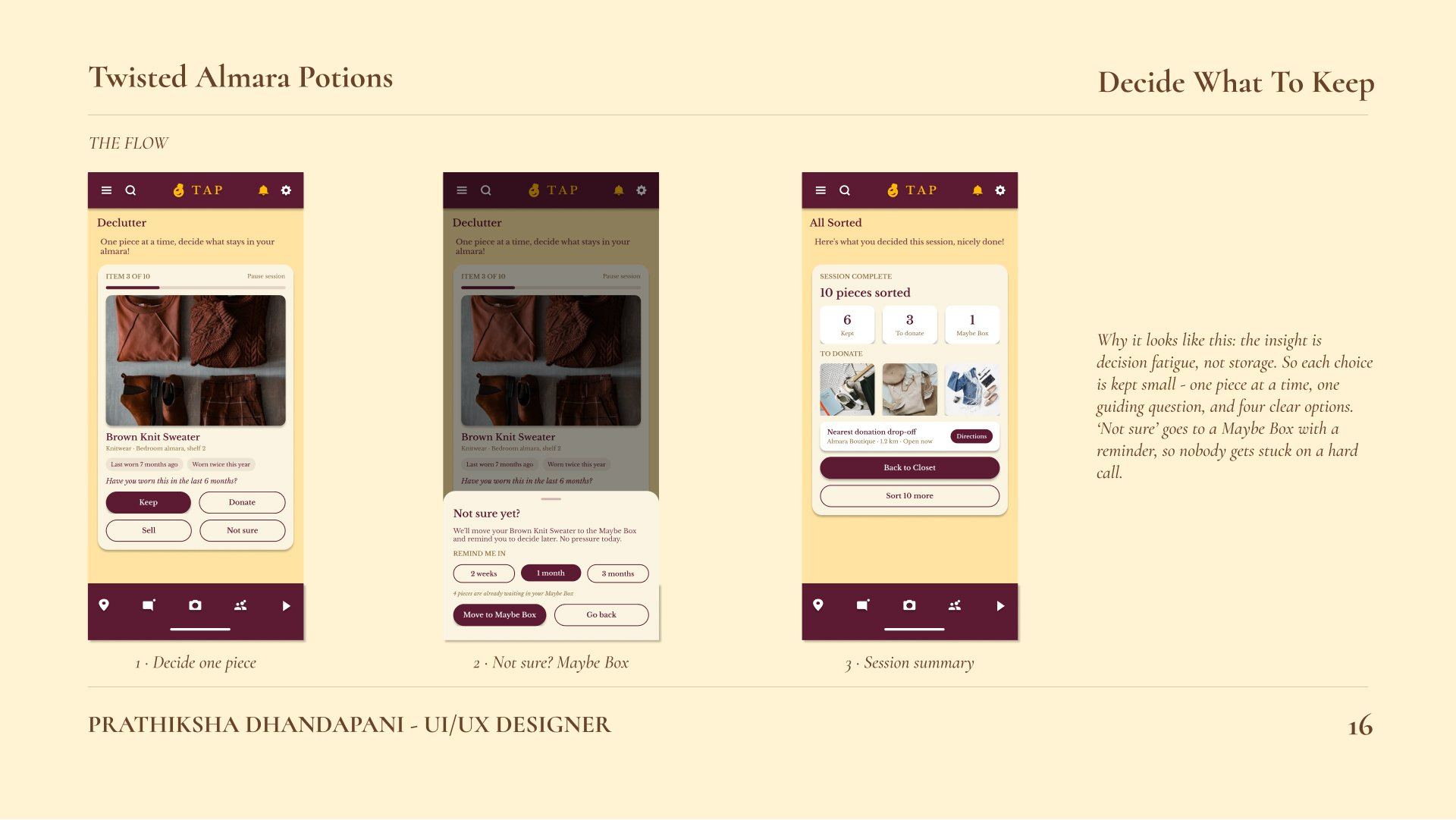
The problem isn’t a lack of storage — it’s decision fatigue.
People don’t need a bigger closet; they need fewer moments of standing in front of one, unsure what works, what’s worth keeping, or where anything actually is.
Process
From research to insight
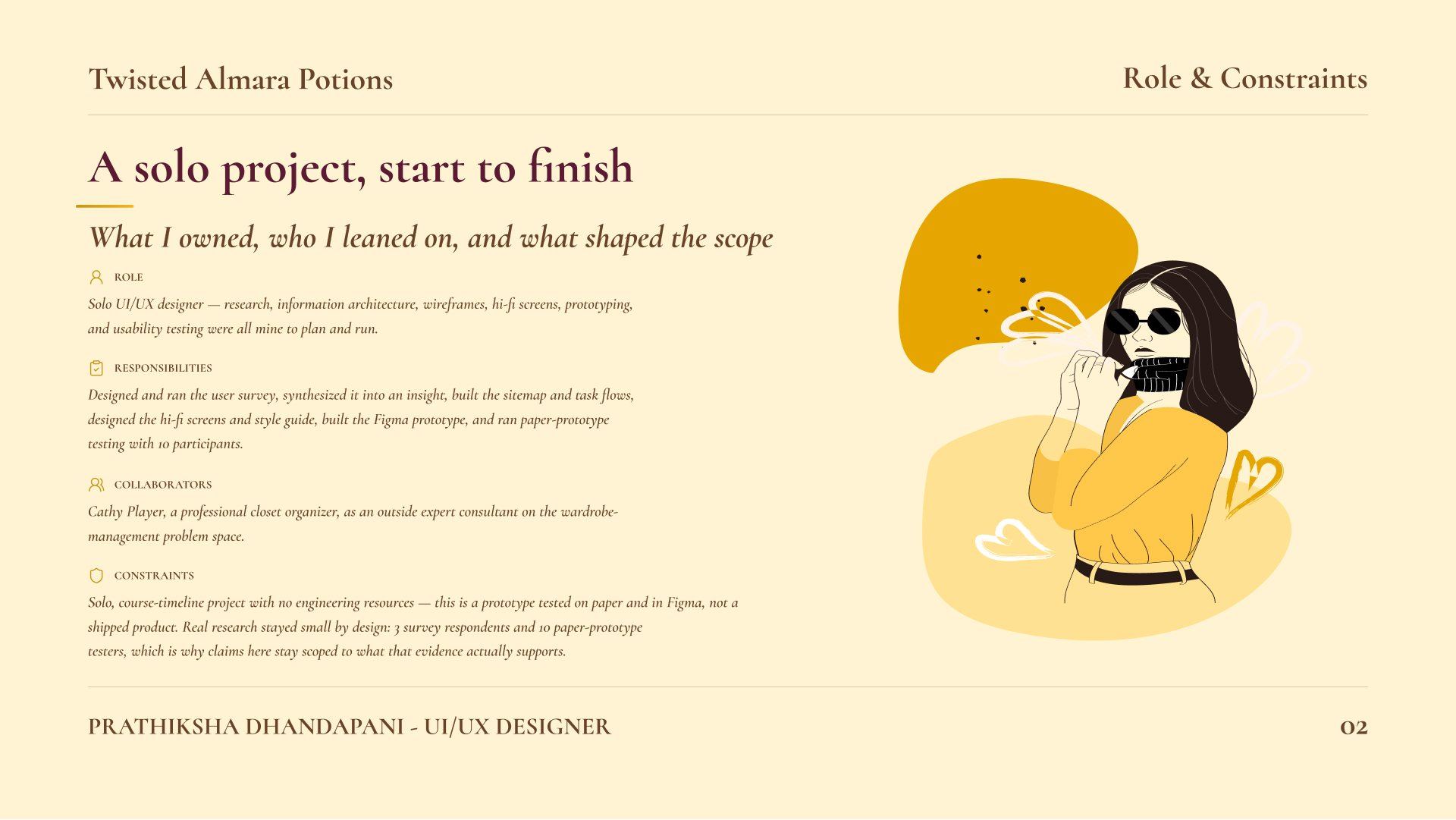
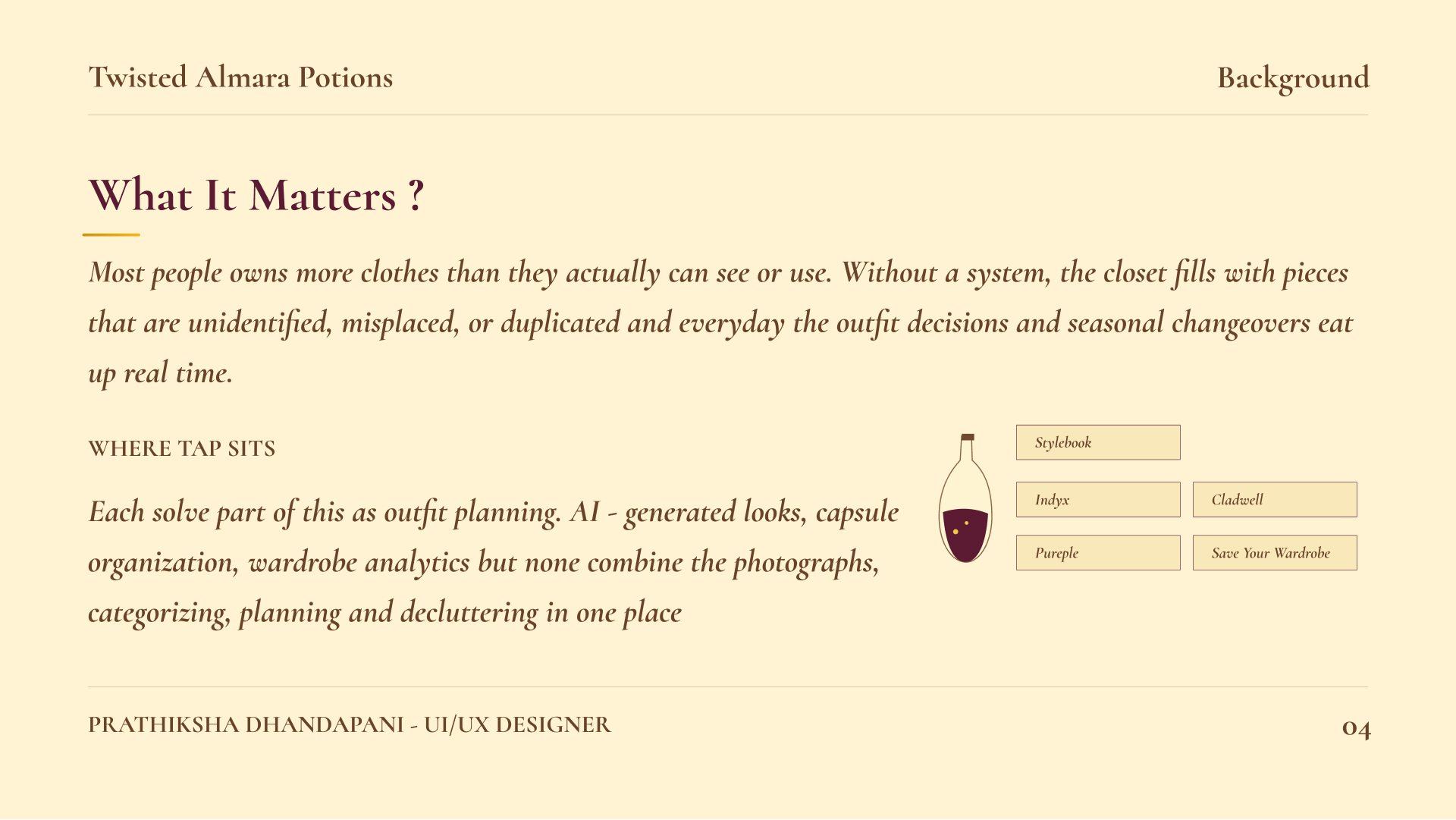
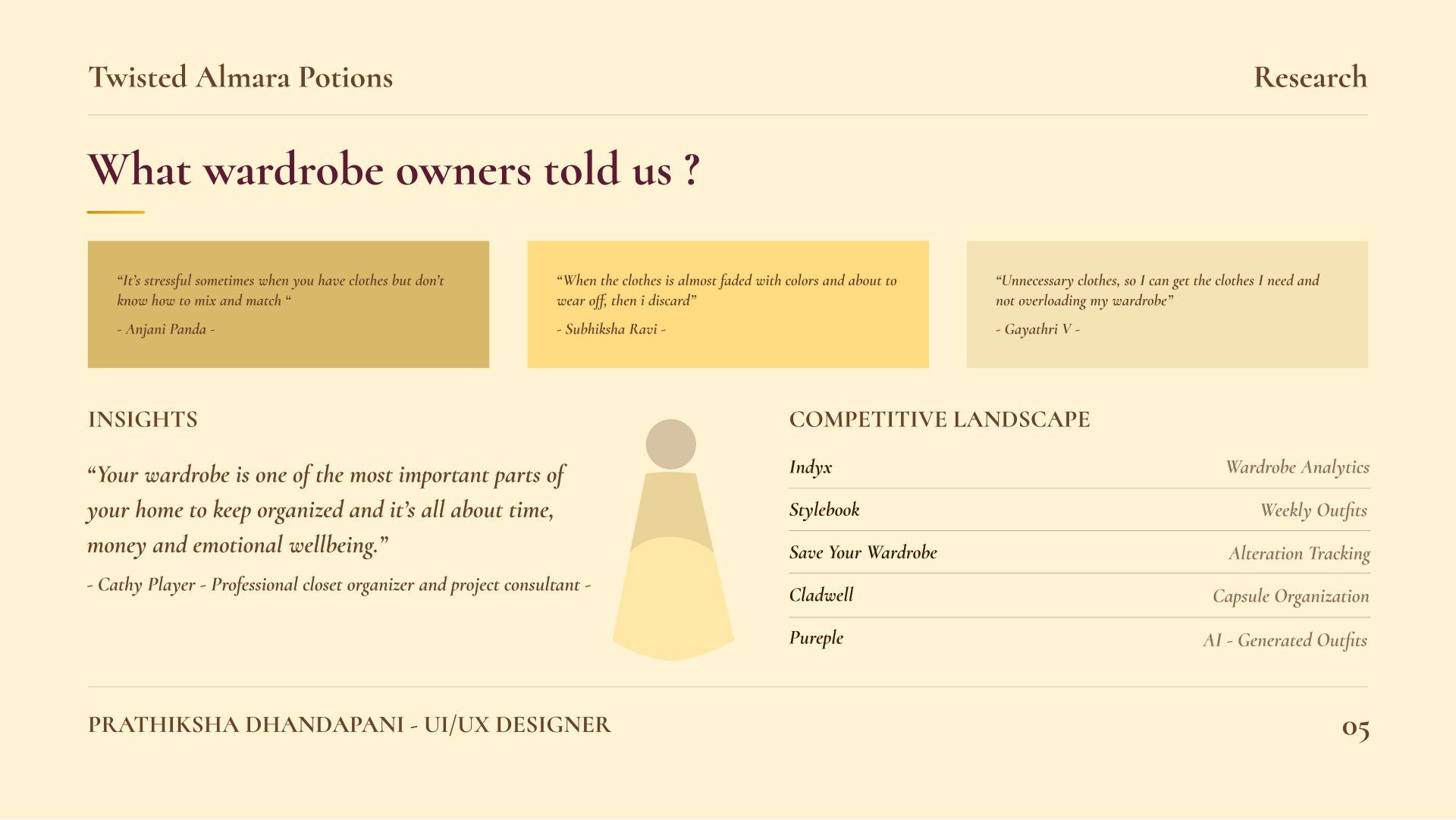
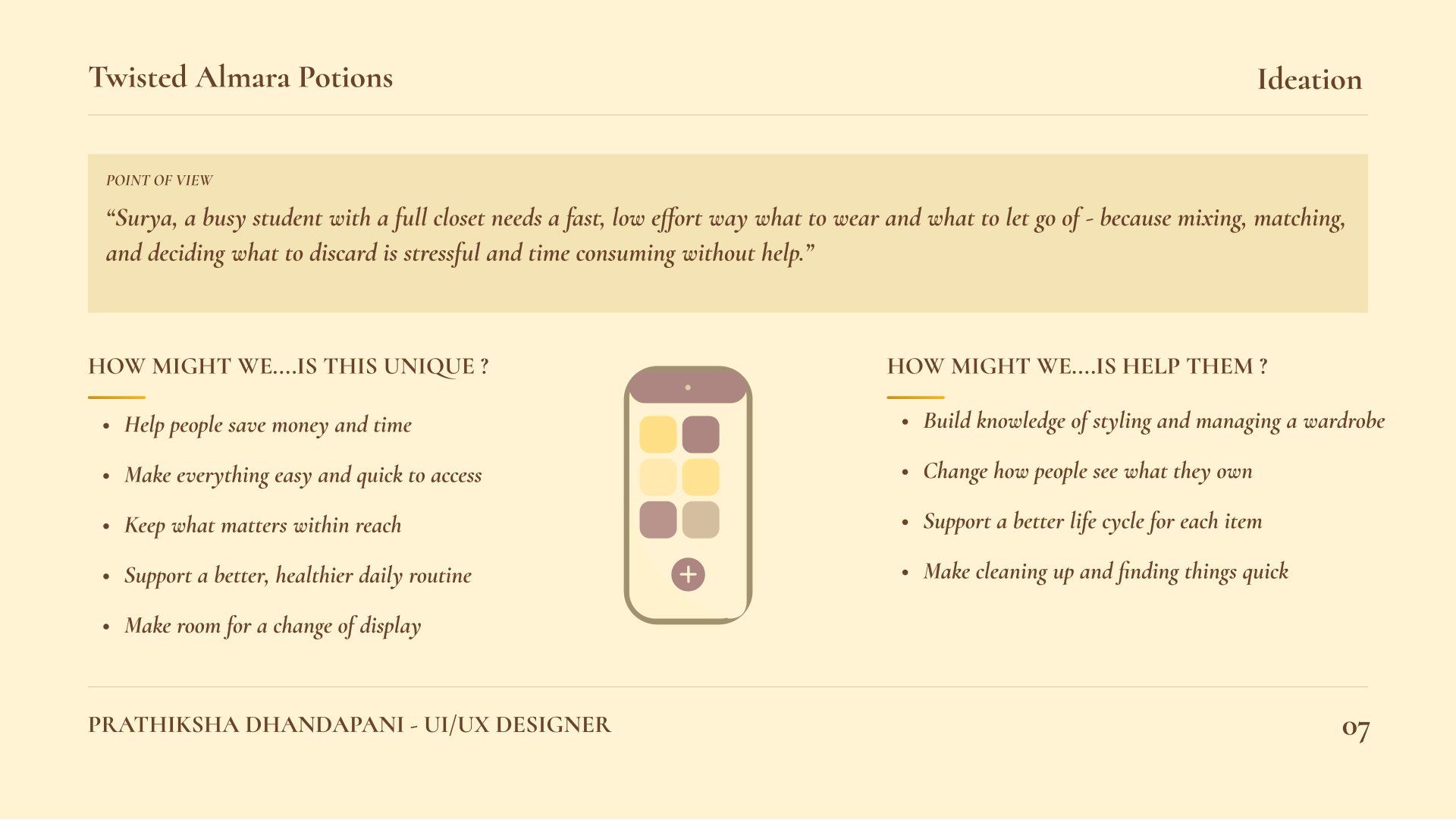
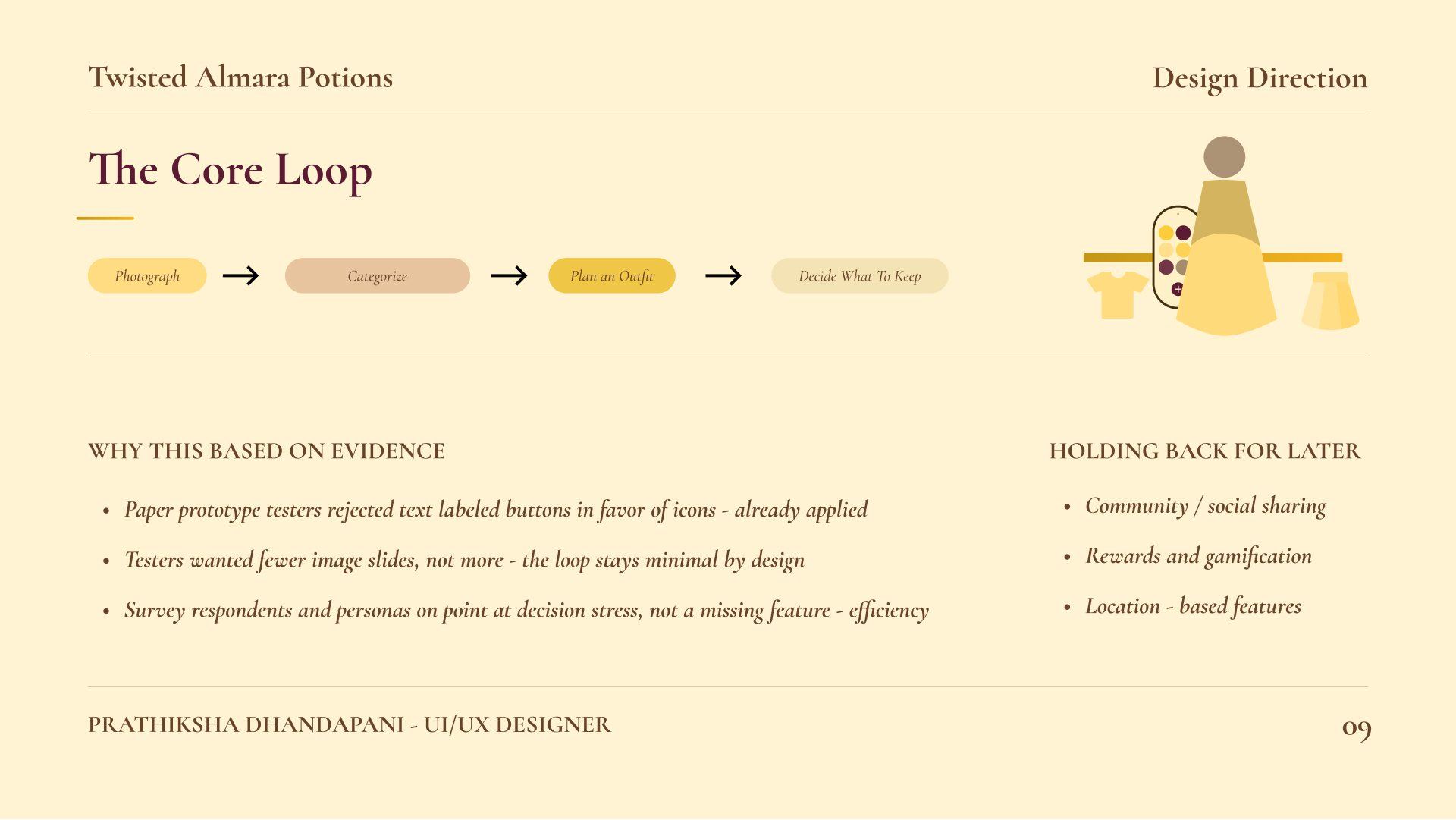
Most people own more clothes than they can see or use. Survey quotes and an expert interview with a professional closet organizer turned assumed problems into one insight: decision fatigue, not storage. That insight shaped the ideation, sitemap and design direction.
Key decision · Testing & iteration
Three changes from paper testing
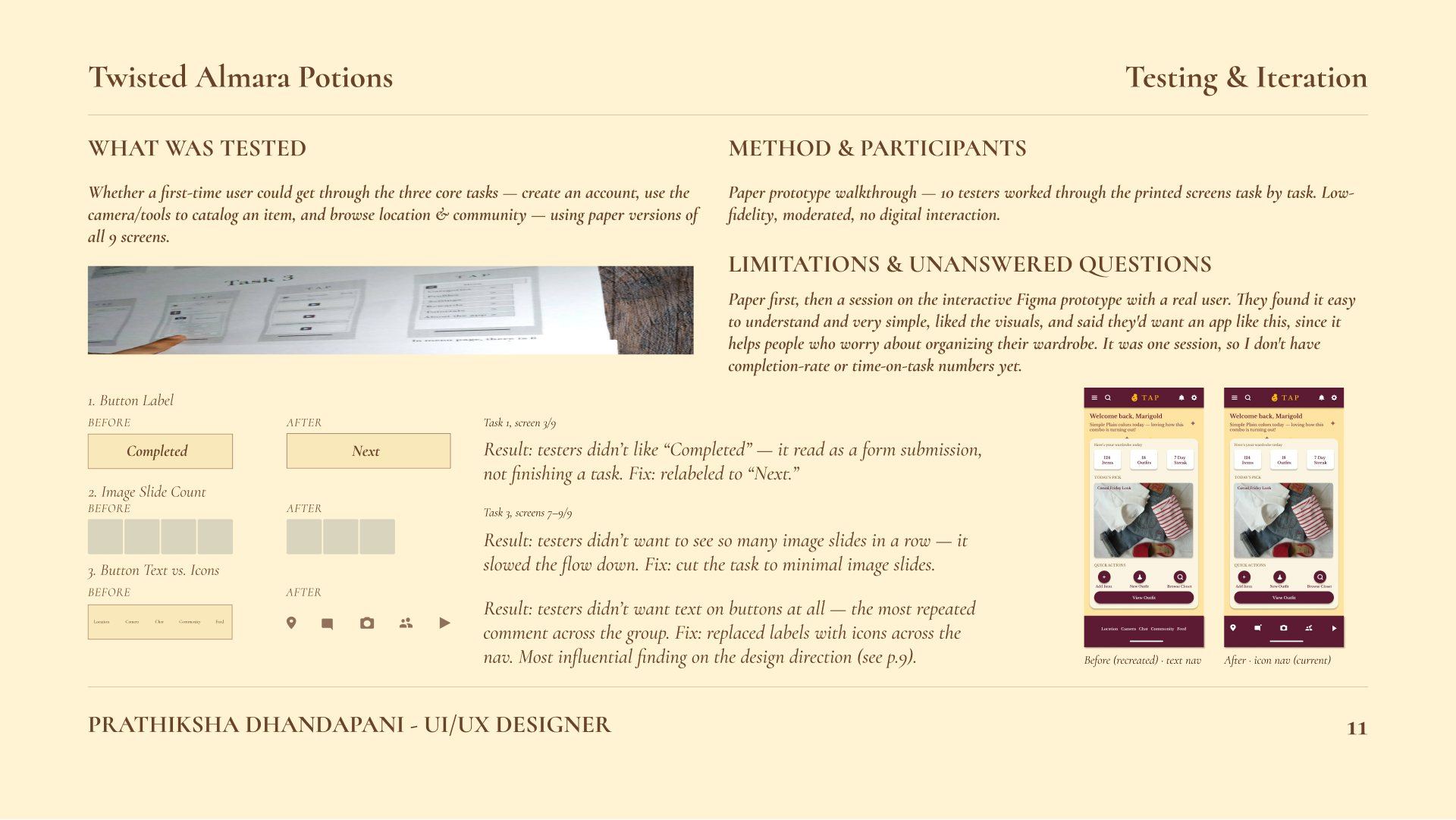
What changed
- Button label: testers read “Completed” as a form submission, so it became “Next”.
- Image slides: testers didn’t want so many image slides in a row, so the task was cut to the minimum.
- Icons over text: the most repeated comment was no text on buttons, so labels became icons across the nav.
Final work
Plan outfits, then decide what to keep
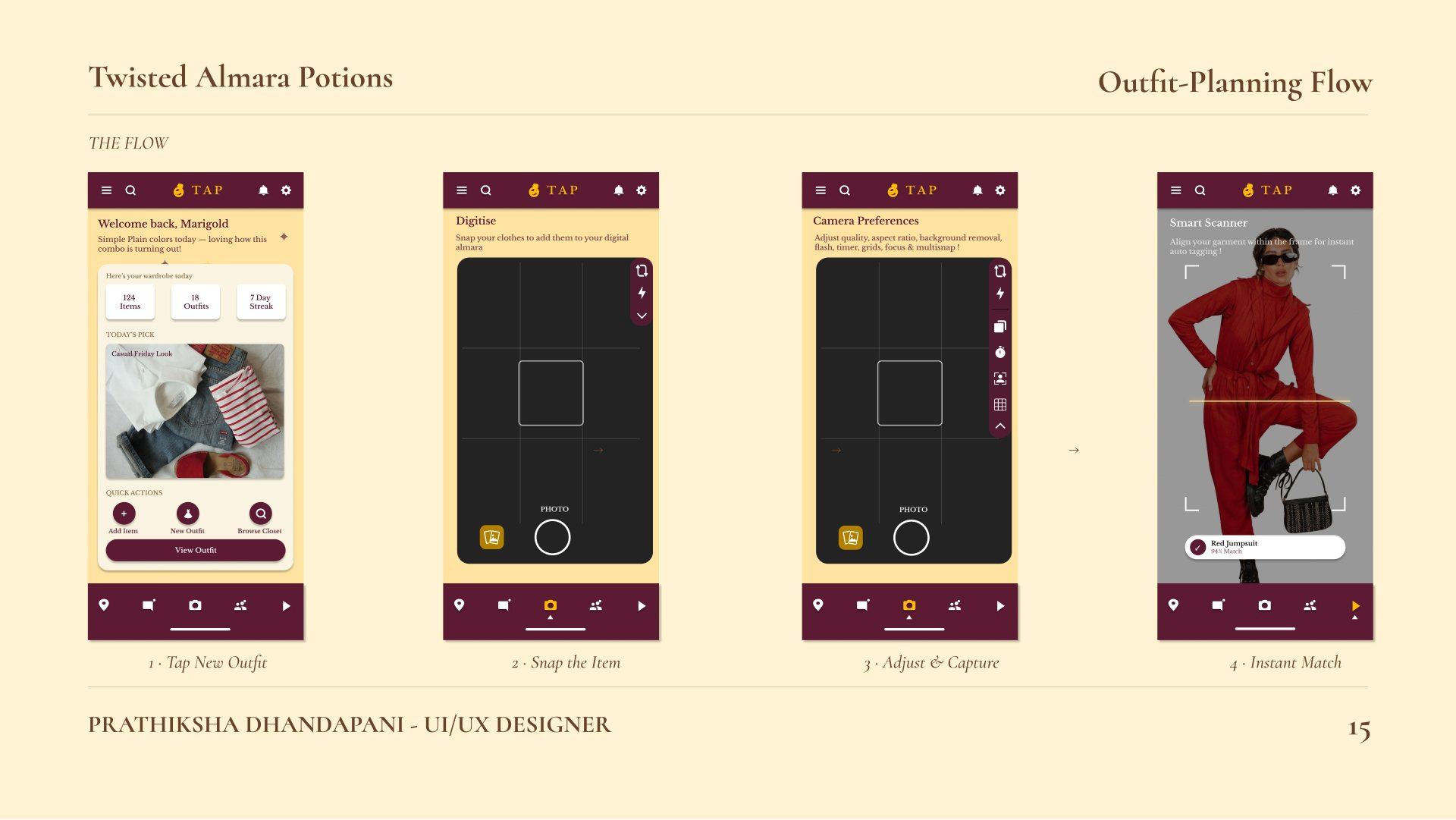
Outfit pairing help and a Decide What To Keep step moved into the core loop, and icons replaced text on buttons.
Reflection
What I learned
Evidence needs a decision
Evidence is only useful once it’s turned into a decision. Real data is often thinner than planned, so scoping matters more than hitting a template’s numbers.
What remains limited
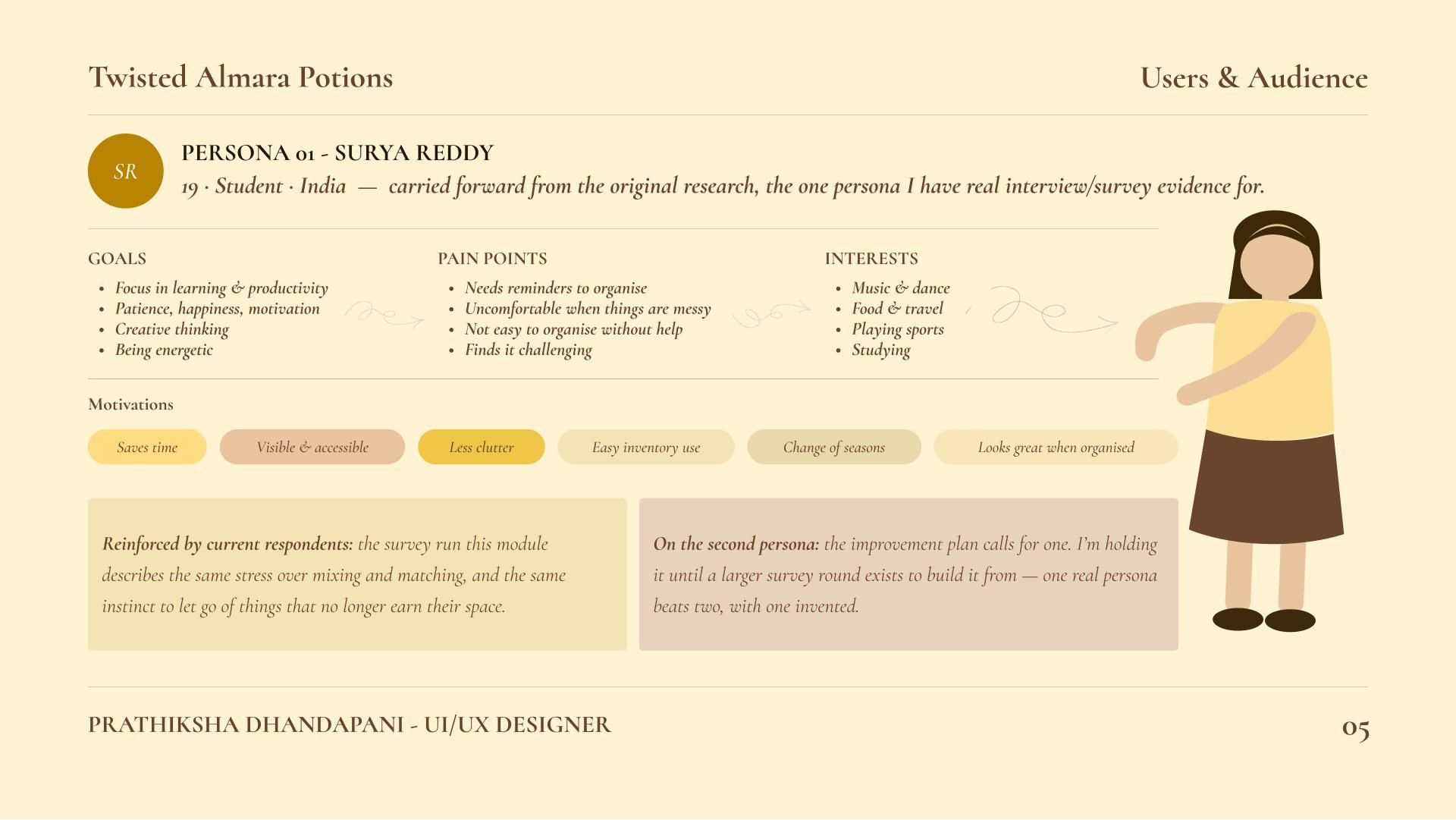
Still one persona, not two. The Figma prototype was tested with a real person in one session, so there are no completion-rate or time-on-task numbers yet.
Next
Run moderated tests on the Figma prototype with more people, and test the new Decide What To Keep flow.